In industries where electronic components and sensitive equipment are handled, even a small amount of static electricity can create problems. An electrostatic discharge that goes unnoticed by a person can potentially damage electronic components, interrupt production processes or affect product quality.
This is why controlling static electricity is an important part of workplace safety and product protection.
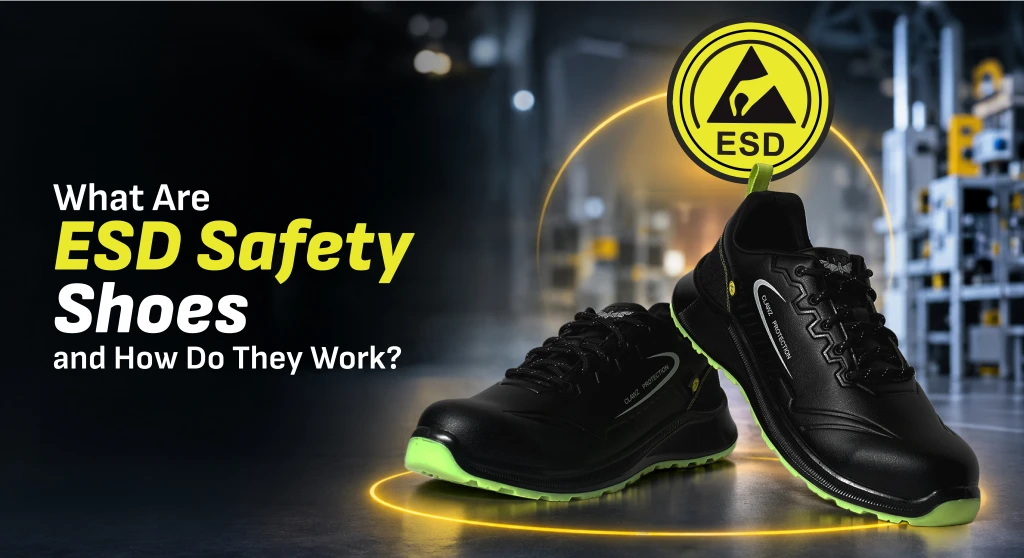
One of the measures used in such environments is ESD safety shoes. These specialised footwear products help control the build-up of static electricity on the human body by providing a controlled path for its dissipation.
But what exactly are ESD safety shoes? How do they work, and how are they different from ordinary safety shoes?
Let's understand their purpose, applications and important features.
What Are ESD Safety Shoes?
ESD stands for Electrostatic Discharge. It refers to the sudden transfer of electrical charge between objects or surfaces with different electrical potentials.
ESD safety shoes are specialised footwear designed to help dissipate static electricity from the wearer's body in a controlled manner.
Unlike ordinary footwear, which may allow static charge to accumulate, ESD footwear is designed to work as part of an electrostatic control system.
These shoes are particularly relevant in workplaces where sensitive electronic components, circuit boards, semiconductor devices and precision equipment are handled.
It is important to understand that ESD safety shoes are not simply regular safety shoes with a different sole. Their electrical properties must be tested and verified against the relevant requirements.
How Do ESD Safety Shoes Work?
To understand how ESD safety shoes work, it helps to first understand how static electricity builds up.
When a person walks, moves or comes into contact with different materials, friction and contact between surfaces can generate static electrical charges. These charges may accumulate on the body, particularly when the person is wearing footwear that does not allow the charge to dissipate easily.
If the accumulated charge is released suddenly, it can create an electrostatic discharge.
ESD footwear helps manage this process through a controlled electrical path.
Here is how the process works:
Step 1: Static charge builds up. Movement and contact between materials can cause electrical charges to accumulate on the human body.
Step 2: Footwear provides a discharge path. ESD-designed footwear incorporates electrical properties that allow charge to pass from the wearer towards the floor.
Step 3: The flooring completes the connection. When used with a suitable ESD flooring system, the footwear helps provide a path through which static charge can dissipate towards ground.
Step 4: Static accumulation is controlled. The system helps reduce the build-up of static charge on the wearer, lowering the risk of uncontrolled electrostatic discharge.
The important point is that ESD footwear works as part of a complete system. The shoes alone cannot guarantee effective electrostatic protection if the floor, grounding arrangements or workplace procedures are unsuitable.
Why Are ESD Safety Shoes Important?
In certain industries, controlling electrostatic discharge is essential for maintaining product quality and protecting sensitive equipment.
Here are some reasons why ESD safety shoes are used in specialised working environments.
1. Protection of Sensitive Electronic Components
Electronic components can be vulnerable to electrostatic discharge. Even a discharge that a person cannot feel may affect sensitive devices.
ESD footwear forms part of the wider electrostatic control programme used to reduce this risk.
2. Supporting Electronics Manufacturing
Manufacturing environments involving circuit boards, semiconductor devices and electronic assemblies require careful control of static electricity.
ESD footwear helps employees maintain the required electrostatic control measures while moving around designated work areas.
3. Reducing Electrostatic Charge Build-Up
Regular footwear may not provide the electrical properties required for controlled static dissipation.
ESD-designed footwear helps manage charge accumulation when used with compatible flooring and other ESD controls.
4. Supporting Product Quality
In industries handling sensitive electronic products, electrostatic discharge can lead to component damage or product failures.
A properly implemented ESD control programme helps organisations reduce these risks during manufacturing, assembly, inspection and handling.
Which Industries Use ESD Safety Shoes?
ESD footwear is useful in workplaces where electrostatic discharge can affect products, processes or equipment.
Some common applications include:
Electronics Manufacturing
Employees handling printed circuit boards, electronic components and sensitive assemblies may work in designated ESD-protected areas.
ESD footwear helps support the static-control requirements of these environments.
Semiconductor Industry
Semiconductor manufacturing involves highly sensitive devices and controlled production processes.
Electrostatic discharge can damage certain semiconductor components, making static-control measures important.
Pharmaceutical and Medical Equipment Manufacturing
Certain production and assembly environments involving sensitive electronic instruments may require electrostatic control.
Footwear requirements should be determined by the specific process and workplace risk assessment.
Automotive Electronics
Modern vehicles incorporate electronic control units, sensors and other sensitive electronic systems.
Facilities handling and assembling these components may use ESD-protected work areas to reduce the risk of electrostatic damage.
Electrical and Electronic Assembly Units
Workplaces involved in assembling, testing and repairing electronic equipment may require ESD footwear as part of their overall static-control procedures.
Not every department within these industries necessarily requires ESD footwear. Its use depends on the sensitivity of the components and the organisation's ESD control plan.
ESD Safety Shoes vs Anti-Static Safety Shoes: What Is the Difference?
ESD and anti-static footwear are related because both deal with controlling electrical charge. However, the terms should not automatically be treated as interchangeable.
Their performance requirements and intended applications can differ.
Comparison factor | ESD safety shoes | Anti-static safety shoes |
Main purpose | Control electrostatic discharge in designated environments | Reduce the accumulation of static electrical charge |
Typical application | Electronics and sensitive component handling | Selected industrial environments requiring static control |
Performance | Evaluated against relevant ESD requirements | Evaluated against applicable anti-static footwear requirements |
Workplace dependency | Requires a suitable ESD control system | Depends on the electrical and safety requirements of the workplace |
Selection | Based on the site's ESD programme | Based on workplace risk assessment |
The exact electrical resistance requirements depend on the applicable standard and test method. Buyers should verify product specifications rather than relying only on the label.
Most importantly, neither ESD nor anti-static footwear should be assumed to provide protection against electric shock.
Are ESD Safety Shoes the Same as Electrical Safety Shoes?
No. These two types of footwear serve different purposes.
ESD safety shoes are designed to help dissipate static electrical charge from the wearer.
Electrical-insulating footwear, on the other hand, is designed for specific electrical hazard protection under defined conditions.
This distinction is particularly important for electricians and workers operating around electrical equipment.
ESD footwear should never be used as a substitute for electrically insulating footwear where protection against electric shock is required.
The footwear must always match the actual electrical hazards identified in the workplace.
What Features Should You Check Before Choosing ESD Safety Shoes?
Selecting ESD footwear requires more than checking whether a product carries an ESD label.
Businesses should evaluate the following factors before making a purchase.
1. Verified Electrical Properties
Check whether the footwear has been tested against the relevant ESD requirements. Review the manufacturer's documentation and specified resistance range.
2. Compatibility with ESD Flooring
ESD footwear must work with the flooring system to establish a suitable path for charge dissipation.
The complete footwear-and-flooring system should be evaluated rather than treating the shoe as an independent solution.
3. Protective Toe Features
If the workplace also involves mechanical hazards, check whether the footwear provides the required toe protection.
ESD performance and mechanical protection are separate characteristics.
4. Comfort and Fit
Workers may wear ESD footwear throughout their shifts. Proper sizing, toe room, cushioning and a secure fit are therefore important.
5. Workplace-Specific Requirements
Consider the sensitivity of the equipment, the nature of the work, floor conditions and the organisation's ESD control procedures.
The final selection should follow a documented workplace assessment.
How to Maintain ESD Safety Shoes
Like other protective footwear, ESD safety shoes require regular inspection and appropriate care.
A few practices can help maintain their condition:
Clean footwear according to the manufacturer's instructions.
Check the outsole for visible damage and excessive wear.
Inspect the upper and sole for cracks or separation.
Avoid unauthorised repairs that may affect electrical properties.
Follow workplace procedures for footwear testing.
Replace footwear when damage or deterioration compromises its intended performance.
Cleaning products, replacement insoles and modifications may affect the electrical characteristics of ESD footwear. Always follow the manufacturer's guidance and the site's ESD procedures.
What Standards Apply to ESD Safety Shoes in India?
When purchasing safety shoes in India, businesses should verify the applicable Indian Standards and product certification.
The Bureau of Indian Standards (BIS) publishes the IS 15298 series for safety, protective and occupational footwear. IS 15298 (Part 2):2024 covers safety footwear.
However, general safety footwear compliance should not automatically be interpreted as proof of ESD performance.
Buyers should separately verify the relevant electrical-property testing, product documentation and ESD requirements applicable to their workplace.
For specialised ESD programmes, organisations may also refer to relevant electrostatic-control standards, such as the IEC 61340 series.
Where Can You Explore Industrial Safety Shoes?
Choosing the right safety footwear requires an understanding of both workplace hazards and product specifications.
Businesses should evaluate toe protection, outsole performance, fit, durability and any specialised electrical properties required for their operations.
Hillson offers a range of industrial safety footwear for different workplace requirements. You can explore Hillson safety shoes and review the available product range.
For applications that specifically require ESD footwear, always confirm the individual product's tested ESD specifications before making a selection.
Ultimately, effective workplace protection comes from choosing footwear that matches the job, the working environment and the safety requirements of the organisation.
Frequently Asked Questions About ESD Safety Shoes
1. What are ESD safety shoes used for?
ESD safety shoes are used in workplaces where controlling electrostatic discharge is important. They help dissipate static charge from the wearer's body when used with a compatible flooring and grounding system.
2. How do ESD safety shoes work?
They provide a controlled electrical path from the wearer through the footwear and compatible flooring towards ground. This helps reduce the accumulation of static electrical charge on the body.
3. What is the difference between ESD and anti-static safety shoes?
Both are designed to manage static electricity, but their electrical performance requirements and applications may differ. ESD footwear is selected for specific electrostatic control requirements, particularly in sensitive electronics environments.
4. Are ESD safety shoes suitable for electronics manufacturing?
Yes. They are commonly used in designated ESD-protected areas where workers handle sensitive electronic components, circuit boards and semiconductor devices.
5. Do ESD safety shoes protect against electric shock?
No. ESD footwear is designed to dissipate static electricity, not to provide protection against electric shock. Electrical-insulating footwear is required for specific electrical hazards.
6. Can ESD safety shoes be worn without ESD flooring?
They may still have particular electrical properties, but effective personnel grounding generally depends on a compatible footwear-and-flooring system. The complete system should be evaluated.
7. How can I identify genuine ESD safety shoes?
Check the manufacturer's technical documentation, relevant test reports, electrical resistance specifications and compliance with applicable ESD requirements. Do not rely only on product descriptions or labels.
8. Are all industrial safety shoes ESD-compatible?
No. Ordinary industrial safety shoes are not automatically ESD footwear. Their electrical properties must be specifically tested and documented for the intended application.