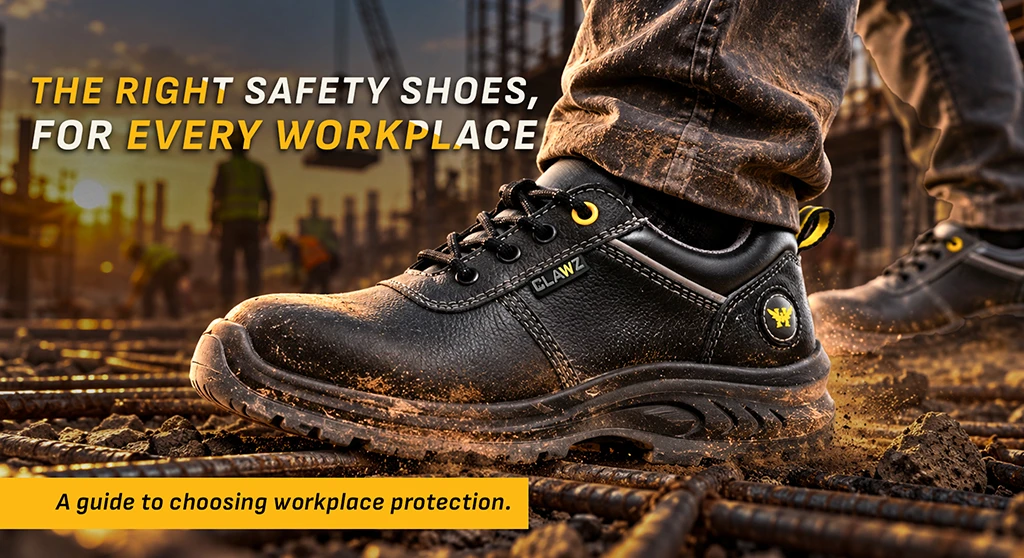
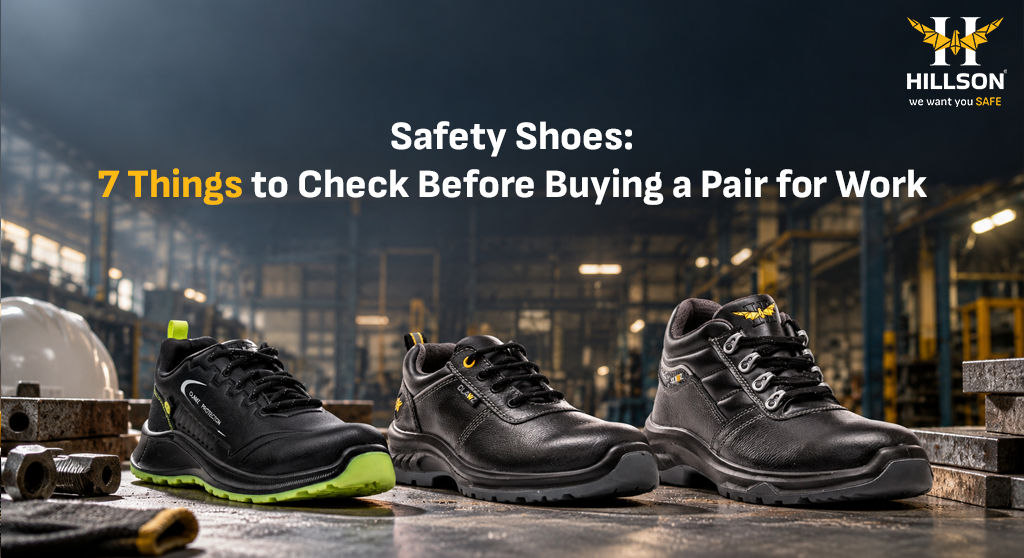
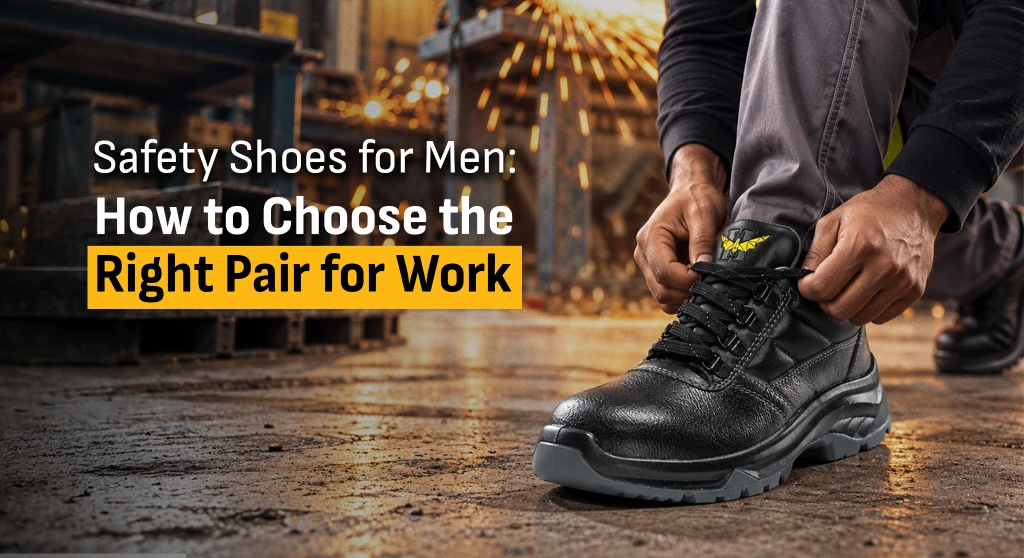
The right safety shoes depend on the work you do.
A construction worker, a factory operator and a warehouse employee may all need protective footwear, but the hazards they face can be very different. One workplace may require protection against falling objects, while another may involve sharp materials, slippery floors or long hours of standing.
Choosing safety shoes, therefore, starts with a simple question: What risks do your feet face at work?
Understanding these risks helps workers, employers and procurement teams identify the right protective features before comparing products.
In this guide, we'll explain how to choose safety shoes for different industries, which features to check and how to evaluate a pair before buying.
How to Choose Safety Shoes for Your Industry
To choose the right safety shoes, identify the hazards in your workplace, determine the protection required and compare footwear that meets those requirements. Check the product's documented safety features, fit, outsole suitability and applicable certification before making a decision.
Here's a quick guide to common work environments.
Industry | Workplace risks to assess | Features to check |
Manufacturing | Heavy components, machinery and falling objects | Appropriate toe protection, outsole suitability and fit |
Construction | Falling materials, sharp objects and uneven surfaces | Toe protection, penetration resistance where required and suitable grip |
Warehousing and logistics | Moving loads, frequent walking and hard floors | Required toe protection, comfortable fit and suitable outsole |
Automotive and engineering | Tools, metal parts, lubricants and workshop floors | Toe protection, grip and any task-specific protective properties |
Electrical and electronics | Electrical hazards or electrostatic-sensitive environments | Footwear with the specific electrical or ESD properties required |
These are starting points, not universal specifications. The right footwear depends on the actual hazards, risk assessment and requirements of the workplace.
1. Safety Shoes for Manufacturing and Factory Workers
Manufacturing environments can expose workers to machinery, heavy components, metal parts and moving equipment. The risks also vary between industries, from metal fabrication to food processing and general assembly.
When choosing safety shoes for factory work, consider:
Toe protection: Select footwear designed to address the impact and compression risks identified at the workplace.
Outsole suitability: Check whether the sole is appropriate for the floor conditions and any contaminants present.
Fit and comfort: Ensure the footwear fits securely and suits the demands of the working shift.
Additional protection: Evaluate any requirements relating to heat, chemicals, penetration or static control.
A shoe suitable for a general assembly line may not be appropriate for a metalworking operation. Always match the footwear specifications to the job.
2. Safety Shoes for Construction Workers
Construction sites can present several foot-injury hazards, including falling materials, sharp debris and uneven ground.
When choosing safety shoes for construction, begin by identifying the main risks at the site.
Toe protection may be required where heavy objects could fall or compress the foot. Penetration-resistant protection may be important where sharp objects are present underfoot. Outsole grip should also be evaluated against the actual walking surfaces and working conditions.
Before purchasing, check:
The required level of toe protection.
Whether penetration resistance is necessary.
The suitability of the outsole for site conditions.
Any additional requirements specified by the site safety team.
The product's applicable standard and certification.
The key is to choose footwear for the hazards on the site, not simply because it is labelled as a construction safety shoe.
3. Safety Shoes for Warehousing and Logistics
Warehouse and logistics employees often spend long periods walking, standing, picking stock and moving goods.
In these environments, protective requirements must be balanced with the demands of daily movement.
Consider the following before choosing a pair:
Does the footwear provide the protection required when handling loads?
Is the outsole suitable for the warehouse floor?
Does the shoe fit securely without excessive pressure?
Is the cushioning appropriate for the employee's working conditions?
Can workers wear the footwear comfortably throughout their shifts?
Comfort matters, but it should never replace the protective features required for the job.
For procurement teams, evaluating fit, protection and product specifications together can help make footwear selection more consistent across the workforce.
4. Safety Shoes for Automotive and Engineering Workshops
Automotive workshops and engineering facilities may involve tools, metal components, machinery, lubricants and oils.
The appropriate footwear depends on the tasks performed and the conditions underfoot.
For example, a workshop where oil is present may require an outsole with suitable tested slip-resistance properties. Work involving heavy components may require appropriate toe protection. Other tasks may have additional electrical, chemical or heat-related requirements.
Before selecting footwear, assess:
The impact and compression hazards present.
The floor conditions and risk of slipping.
Whether sharp objects or other specific hazards are present.
Any specialist protective properties required for the task.
The relevant product documentation.
Do not assume that all industrial safety shoes offer the same protection. Compare the specifications of individual models against the risks identified.
5. Safety Shoes for Electrical and Electronics Work
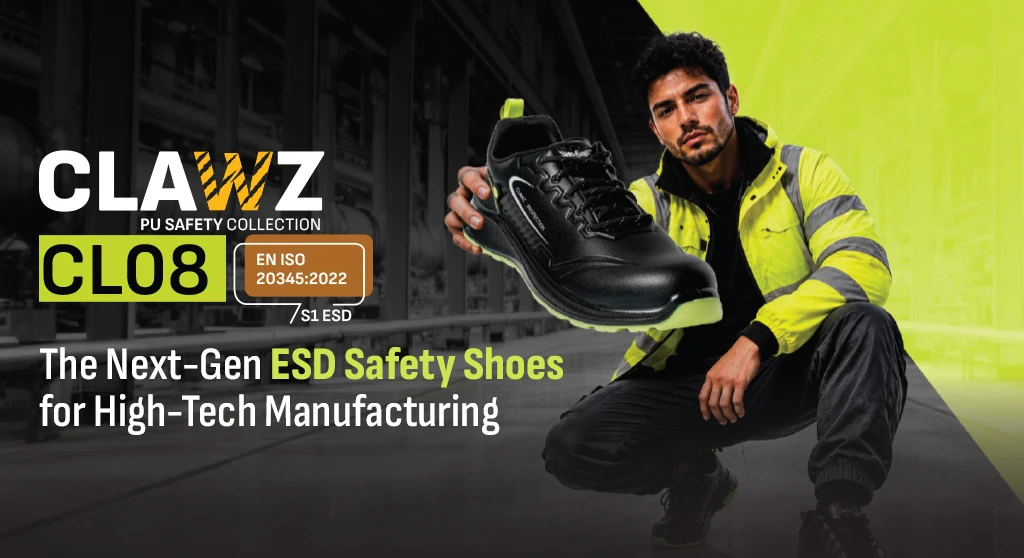
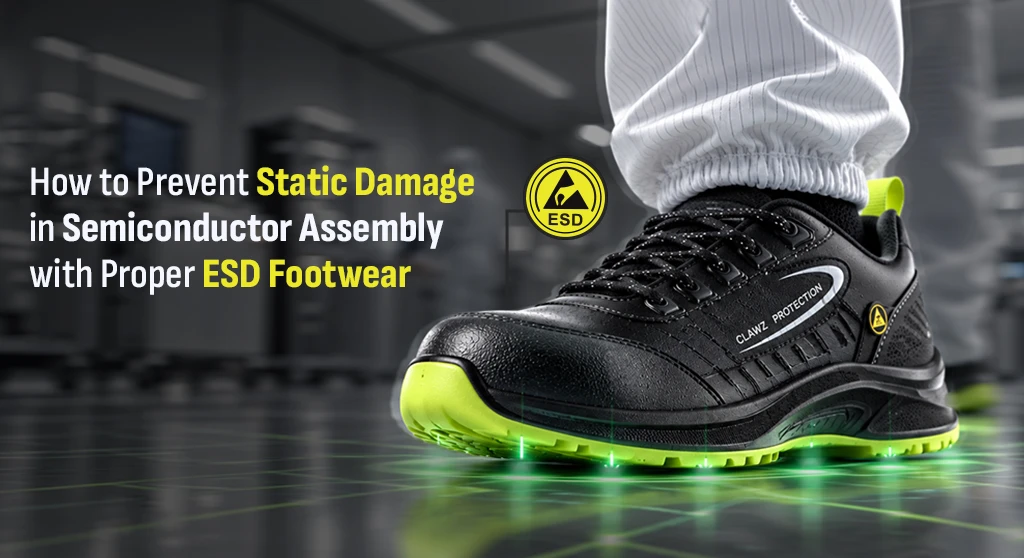
Electrical and electronics environments require careful consideration because electrical protection and electrostatic discharge control are different requirements.
Footwear selected for an electrostatic-sensitive workplace is not automatically suitable for protection against electric shock. Likewise, ordinary safety shoes should not be assumed to provide electrical protection simply because they have protective toe caps.
Before choosing footwear, determine whether the workplace requires:
Electrical insulation or another specific electrical property.
Electrostatic discharge (ESD) control.
Protective toe caps.
Additional features required by the workplace risk assessment.
Verify the relevant testing, certification and product documentation before use.
When electrical hazards are involved, footwear selection should form part of the workplace's wider safety programme.
What Features Should You Check Before Buying Safety Shoes?
Once you understand the hazards, compare individual models against the requirements of the job.
1. Toe Protection
Protective toe caps are designed to reduce certain foot-injury risks associated with impact and compression when the footwear meets the relevant requirements.
Steel and composite toe caps are common options, but the material alone does not establish the shoe's overall protection level. Check the applicable specifications and certification.
2. Outsole Grip and Construction
The outsole affects how footwear interacts with the walking surface.
Consider the conditions in which the shoes will be used, including dry or wet floors and the presence of oil or other contaminants. Where slip resistance is important, look for documented performance appropriate to the workplace.
Avoid assuming that every safety shoe offers the same level of grip.
3. Fit and Comfort
Safety shoes should fit securely and allow sufficient room for the toes.
When evaluating a pair, check for:
Adequate toe room.
A secure heel fit.
Excessive pressure or rubbing.
Comfort during the movements required by the job.
Compatibility with any work socks or insoles used.
A shoe that fits poorly can become difficult to wear over a long shift. Fit should be assessed alongside protection rather than treated as an afterthought.
4. Additional Protective Properties
Some jobs require protection beyond the basic features of safety footwear.
Depending on the workplace, these may include penetration resistance, heat resistance, chemical resistance or particular electrical and electrostatic properties.
Not every model provides all these features. Verify the manufacturer's specifications for the exact product rather than relying on broad category descriptions.
5. Safety Standards and Certification
Before buying safety shoes, check the applicable safety standard, certification and product markings.
In India, the IS 15298 series covers personal protective equipment — safety footwear. The applicable part and requirements depend on the product and intended use.
Procurement teams should verify current regulatory requirements and the documentation associated with the particular model before approving it for workplace use.
A Practical Checklist for Buying Safety Shoes
Before placing an order, use this checklist to evaluate the available options.
Identify the main foot hazards in the workplace.
Determine the required toe protection and other protective features.
Check whether the outsole is suitable for the working surface.
Confirm the correct size, fit and comfort.
Verify the applicable standard and certification.
Review the exact product specifications and limitations.
Confirm that the selected footwear meets the employer's safety requirements.
For bulk purchases, procurement teams should also evaluate consistency across models, available sizes, documentation and suitability for the different roles within the organisation.
This helps shift the decision from choosing footwear by appearance or price alone to evaluating it against defined workplace needs.
Explore Hillson CLAWZ Safety Shoes
Choosing the right safety shoes begins with understanding the job and identifying the protection it requires.
Hillson's CLAWZ range gives buyers a product range to explore when evaluating footwear for work. Before selecting a particular model, compare its documented specifications with your workplace requirements.
Explore the Hillson CLAWZ to review the available product information.
When evaluating CLAWZ or any other safety footwear, check the exact model's protective features, fit, outsole properties and certification rather than assuming that every model is suitable for every industry.
The right safety shoes are the ones that meet the protection requirements of your work.
Frequently Asked Questions
1. How do I choose the right safety shoes for work?
Identify the hazards in your workplace, determine the protection required and compare footwear based on toe protection, outsole suitability, fit, additional features and applicable certification.
2. Which safety shoes are suitable for factory workers?
The right safety shoes depend on the manufacturing process. Factory workers may need toe protection, suitable outsole grip and additional features based on machinery, materials and floor conditions.
3. What should I look for in construction safety shoes?
Evaluate toe protection, penetration resistance where required, outsole suitability and any additional features specified by the construction site's risk assessment.
4. Are all industrial safety shoes suitable for every workplace?
No. Different workplaces present different hazards, and safety footwear models vary in their protective properties. Check the specifications of the individual model against the requirements of the job.
5. Are comfortable safety shoes important for long working hours?
Yes. A suitable fit can help make protective footwear practical for extended wear. However, comfort should be considered alongside the protection required for the workplace.
6. What is the difference between electrical protection and ESD footwear?
Electrical protection and electrostatic discharge control address different requirements. Footwear designed for one purpose should not automatically be assumed suitable for the other. Always verify the relevant specifications and workplace requirements.
7. What should I check before buying safety shoes in bulk?
Assess the hazards across the relevant job roles, define the required protective features, verify product documentation and certification, check available sizes and evaluate fit and suitability before approving a bulk order.
Conclusion
Choosing safety shoes is a workplace-specific decision.
Manufacturing, construction, warehousing and engineering can all require different combinations of protection, grip and comfort. The most effective starting point is to understand the hazards, define the requirements and compare footwear using verified product information.
For workers, this means choosing shoes that suit the job. For employers and procurement teams, it means evaluating products against clear safety requirements.
Understand the risk. Check the specifications. Choose the right protection.
Hillson — We Want You Safe.