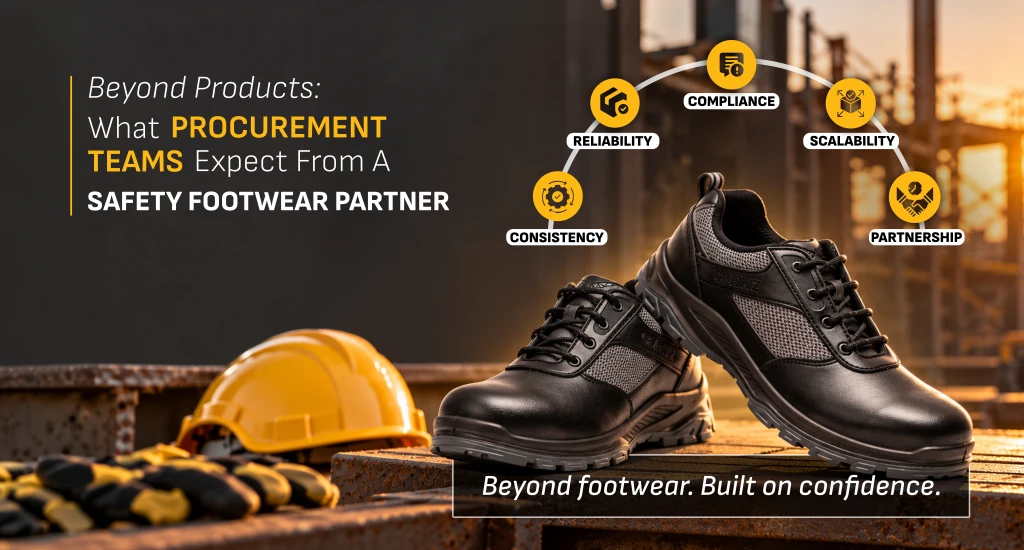
A good safety footwear supplier delivers the product. A dependable partner helps you manage everything around it.
When businesses evaluate a safety footwear supplier, price and product specifications are naturally part of the conversation. But for procurement teams managing recurring requirements, multiple workers or multiple locations, the evaluation often goes further.
Can the supplier maintain consistent quality?
Can they deliver when required?
Can they meet relevant compliance requirements?
Can they support changing volumes and workplace needs?
These factors can directly affect procurement efficiency, workforce readiness and operational continuity.
That is why supplier selection should look beyond the product itself and consider the capability behind the product.
Consistency
One good order is not enough.
Procurement teams need confidence that the expected level of quality will be maintained across repeated orders.
Consistency in materials, construction, product specifications and quality standards can help reduce uncertainty, particularly when safety footwear is being supplied across different locations or over an extended period.
Before selecting a supplier, procurement teams can consider:
Are product specifications clearly documented?
Is quality controlled across production batches?
Are relevant testing and certification documents available?
Can the supplier maintain consistency as order volumes increase?
The goal is simple: the product you receive next should meet the expectations set by the product you received first.
Reliability
A safety footwear requirement rarely ends with one purchase order.
Businesses may need regular replenishment, additional sizes, new products for expanding teams or footwear for new locations.
That makes supplier reliability an important consideration.
Procurement teams should look at:
Delivery timelines
Product availability
Recurring order capability
Communication during changing requirements
Ability to manage larger or time-sensitive orders
A reliable supplier helps procurement teams plan ahead rather than constantly react to supply issues.
Compliance
For safety footwear, compliance cannot be an afterthought.
Depending on the workplace, industry and market, businesses may have specific safety and certification requirements. Procurement teams therefore need to understand what standards apply to the footwear being considered and whether the relevant documentation is available.
This is particularly important when procurement works alongside EHS, operations and workplace safety teams.
A useful supplier should be able to provide clear product information that helps the buying team understand:
What does the footwear protect against?
Which standard or certification does it meet?
Is the documentation available for verification?
Compliance is not simply about checking a box. It helps procurement teams make a more informed purchasing decision.
Scalability
Today's requirement may not be tomorrow's requirement.
A company may expand its workforce, open another facility, increase production or standardise safety footwear across multiple locations.
Its footwear requirements can change with it.
That is why procurement teams should consider whether a supplier can support:
Higher volumes
Multiple locations
Recurring requirements
Different footwear categories
Changing workplace needs
A supplier that can scale with the business can reduce the need to repeatedly search for new suppliers as requirements evolve.
Product Range Matters
Not every worker faces the same workplace conditions.
A construction worker, manufacturing operator, warehouse employee and electronics technician may have different footwear requirements.
For procurement teams, this means product selection should begin with the application, not simply the product catalogue.
Depending on the workplace, requirements may include:
Toe protection
Anti-perforation protection
Slip resistance
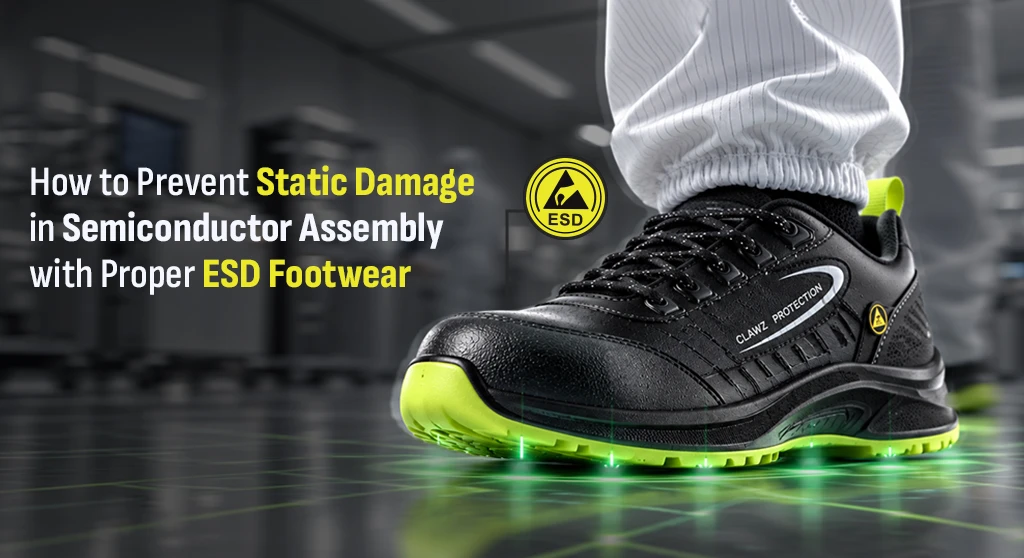
Static or electrical protection
Waterproof construction
Lightweight designs
Long-shift comfort
Industry-specific safety requirements
A broader safety footwear range can give businesses more flexibility to match footwear with different jobs and working environments.
The objective isn't to buy more products.
It is to choose the right product for the right requirement.
Partnership
The relationship doesn't end when the purchase order is completed.
Strong supplier relationships are built through communication, responsiveness and an understanding of the customer's requirements.
For procurement teams, this can mean having a supplier who can:
Understand the application before recommending products
Provide relevant product information
Respond to changing requirements
Support recurring orders
Help evaluate different footwear options
Maintain clear communication throughout the relationship
Over time, these capabilities can make procurement easier to manage.
The supplier becomes more than a source of safety footwear. They become a resource that procurement teams can work with as requirements evolve.
A Practical Supplier Evaluation Checklist
Before finalising a safety footwear supplier, procurement teams can ask:
What to check | Why it matters |
Quality consistency | Helps maintain predictable product performance |
Supply reliability | Supports workforce readiness and planning |
Relevant compliance | Helps meet workplace and regulatory requirements |
Product range | Allows footwear to be matched to different applications |
Scalability | Supports increasing volumes and locations |
Product information | Helps procurement make informed comparisons |
Communication | Makes recurring requirements easier to manage |
Long-term support | Builds continuity beyond individual orders |
This approach shifts the conversation from “Which supplier has the lowest price?” to a more useful question:
“Which supplier can reliably support our requirements over time?”
Why These Factors Matter
A safety footwear supplier can have a direct connection with several areas of business operations.
Reliable supply can support workforce readiness.
Consistent quality can reduce uncertainty across repeated orders.
Relevant compliance documentation can support procurement and EHS evaluations.
A scalable product range can help businesses manage changing workforce and workplace requirements.
And responsive communication can make recurring procurement easier to manage.
Together, these factors contribute to a supplier relationship that goes beyond individual transactions.
Conclusion
Choosing a safety footwear supplier isn't simply about finding a shoe at the right price.
It is about finding a supplier that can consistently support the people, processes and requirements behind that purchase.
Quality matters.
Reliability matters.
Compliance matters.
Scalability matters.
But so does the relationship built around all of them.
Because in industrial procurement, the value of a safety footwear partner is not measured only by what they deliver. It is also measured by how confidently you can rely on them.
FAQs
What should procurement teams look for in a safety footwear supplier?
Procurement teams should consider more than price and product specifications. Key factors include quality consistency, supply reliability, relevant compliance, product range, scalability, product documentation and supplier responsiveness.
Why is supplier reliability important when buying safety footwear?
Reliable supply helps businesses maintain footwear availability for new employees, replacements and recurring requirements. It can also make inventory and procurement planning easier.
How should businesses choose safety footwear for different workers?
Start with the work environment and specific risks. Different roles may require different levels or types of protection, so procurement teams should evaluate footwear based on the application rather than selecting one product for every worker.
Why does compliance matter when selecting safety footwear?
Safety footwear may need to meet specific standards depending on its intended application and market. Reviewing relevant certifications and product documentation helps procurement and EHS teams verify that the footwear meets their requirements.
Does a wider safety footwear range help procurement teams?
It can. A broader range allows businesses to consider different footwear options for different applications, such as manufacturing, construction, warehouses or static-sensitive environments.
What makes a safety footwear supplier a long-term partner?
Beyond supplying products, a long-term partner should be able to provide consistent quality, reliable supply, relevant product information, scalable support and responsive communication as the customer's requirements change.