-

find us
Bahadurgarh, Haryana, India -

call us today
+91-9588185772 -

EMAIL US NOW
info@hillsonshoes.com
find us
Bahadurgarh, Haryana, India
call us today
+91-9588185772
EMAIL US NOW
info@hillsonshoes.com

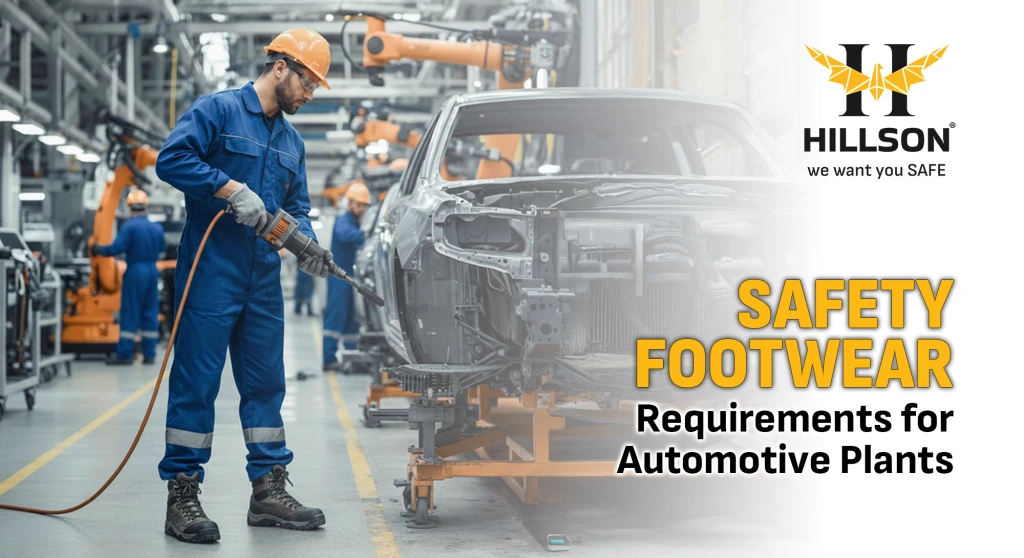
Safety Footwear Requirements for Automotive Plants
by Hillson Jan 20 2026
Automotive plants are high-activity, high-risk environments. From assembly lines and machining areas to material handling and maintenance zones, workers are exposed to multiple safety hazards every day. One of the most important protective elements in these environments is safety footwear.
Choosing the right safety footwear for automotive plants is not just about compliance—it plays a key role in reducing injuries, improving comfort during long shifts, and maintaining consistent productivity.
This blog explains the basic safety footwear requirements for automotive manufacturing environments simply and practically.
Automotive plants involve:
Moving machinery and equipment
Oil, grease, and coolant spills
Heavy components and tools
Long-standing and walking hours
Heat, metal scraps, and sharp debris
Foot injuries, slips, and fatigue are common risks when footwear is not suited to these conditions. That is why automotive-specific safety footwear requirements are different from general industrial footwear.
Oil and coolant spills are common in automotive plants. Footwear must provide strong slip resistance to reduce the risk of falls. 